
Bone Marrow Transplant: What Is It and How Safe Is It for Patients?
Nancy Sharma · 2026-09-24
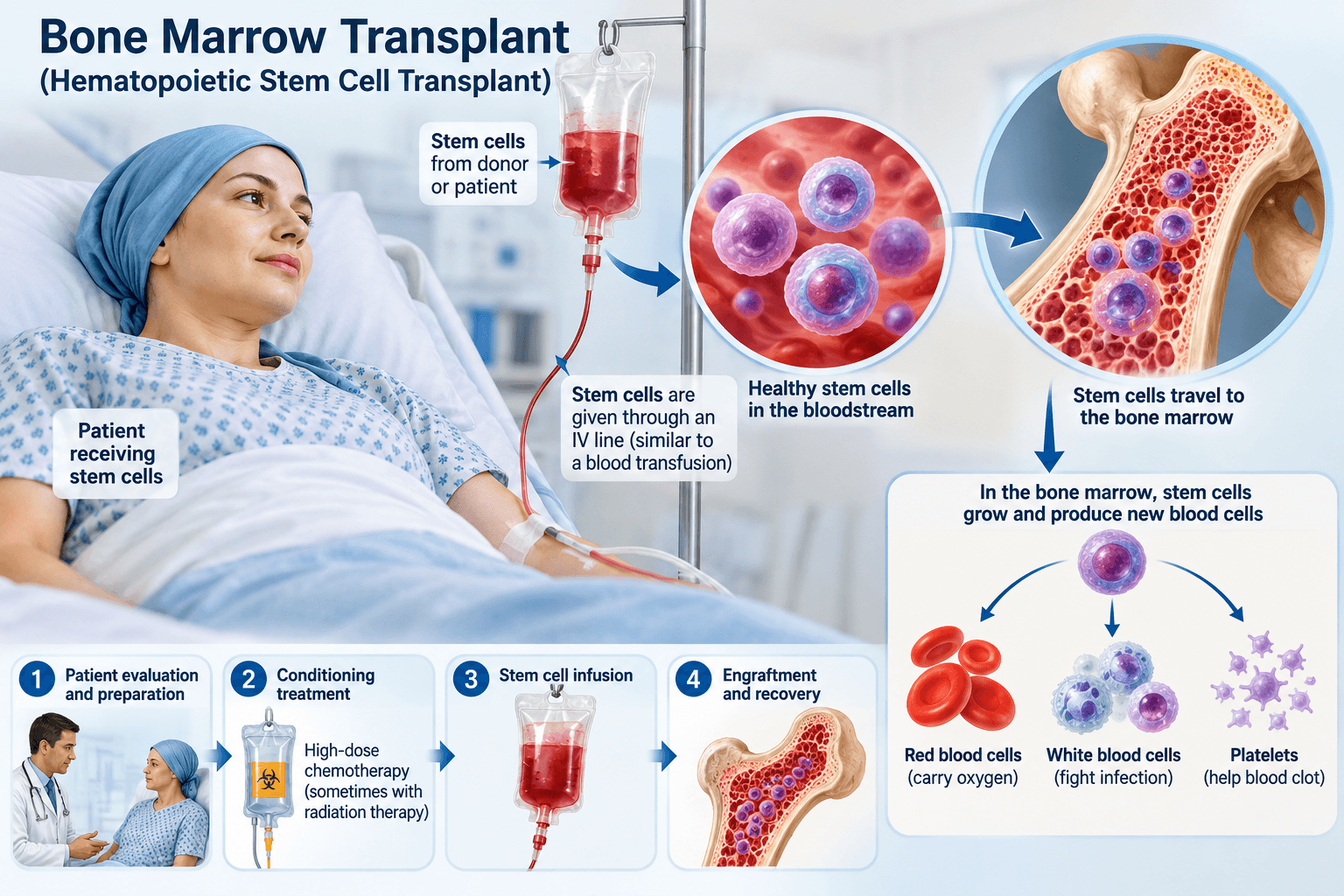
A bone marrow transplant, also known as a hematopoietic stem cell transplant (HSCT), is a specialized treatment for certain blood cancers and blood disorders. It replaces damaged or unhealthy blood-forming stem cells with healthy cells. The two main types are autologous transplant, using the patient’s own stem cells, and allogeneic transplant, using donor cells. Although the stem cell infusion itself is generally not a surgical procedure, treatment and recovery can be intensive.
A bone marrow transplant, is also known as a hematopoietic stem cell transplant (HSCT), is a medical treatment used for certain blood cancers, bone marrow disorders, and inherited diseases. It helps replace damaged or diseased blood-forming stem cells with healthy cells that can restore the body's ability to produce blood.
The term “bone marrow transplant” may sound like a surgical procedure. Nevertheless, the actual infusion of stem cells is usually similar to getting a blood transfusion. The cells are introduced into the bloodstream through an IV or central venous catheter. From there, they travel to the bone marrow, where they can begin themselves and produce new blood cells.
For patients and families, one of the most important questions is whether a bone marrow transplant is safe. The answer depends on several individual factors, including the patient's underlying illness, general health, transplant type, and treatment plan. Although transplantation can offer a chance of long-term exemption or cure for some conditions, it also involves significant risks.
What Is Bone Marrow and Why Is It Important?
Bone marrow is a soft, spongy tissue located inside certain bones. It contains blood-forming stem cells, which develop into the different types of blood cells needed for normal body function.
These include:
- Red blood cells: Carry oxygen throughout the body.
- White blood cells: Help the immune system fight infections.
- Platelets: Help the blood clot and reduce bleeding.
Diseases such as leukemia, aplastic anemia, and certain inherited blood disorders can interfere with normal blood cell production. Some cancer treatments can also damage the bone marrow.
A stem cell transplant may help restore the blood-forming system by introducing healthy stem cells that can produce new blood cells.
Why Do Doctors Recommend a Bone Marrow Transplant?
A transplant may be considered when the patient's disease cannot be adequately treated with other approaches, or when transplantation offers a potential long-term benefit.
Conditions that may be treated with a bone marrow or blood stem cell transplant include:
- Leukemia
- Lymphoma
- Multiple myeloma
- Selected myelodysplastic syndromes and other marrow disorders
- Aplastic anemia
- Sickle cell disease
- Thalassemia
- Certain inherited immune-system and blood disorders
Not every patient with these conditions needs a transplant. The decision depends on the specific diagnosis, disease stage, response to previous treatment, age, overall health, and expected benefits compared with the risks.
A transplant specialist evaluates these factors before recommending the procedure.
What Are the Different Types of Bone Marrow Transplant?
There are two main types of hematopoietic stem cell transplantation.
1. Autologous Stem Cell Transplant
An autologous transplant uses the patient's own stem cells.
The cells are collected from the patient's blood before intensive treatment and stored until they are needed. The patient then receives high-dose chemotherapy, after which the stored stem cells are infused back into the body.
How it works:
- Stem cells are collected from the patient.
- The cells are preserved for later use.
- The patient receives intensive chemotherapy.
- The stored stem cells are returned through an IV.
- The cells travel to the bone marrow and begin producing blood cells.
Because the stem cells come from the same patient, graft-versus-host disease (GVHD), which occurs when donor immune cells attack the recipient's tissues, is not a complication of an autologous transplant.
However, this type of transplant is not appropriate for every disease. Its suitability depends on the patient's condition and whether collecting and returning their own stem cells is medically appropriate.
2. Allogeneic Stem Cell Transplant
An allogeneic transplant uses stem cells from another person, known as a donor.
The donor may be a sibling, another relative, or an unrelated volunteer. Doctors assess human leukocyte antigen (HLA) compatibility and other factors when selecting a suitable donor.
The procedure generally involves:
- Identifying an appropriate donor.
- Collecting healthy stem cells.
- Preparing the patient with conditioning treatment.
- Infusing the donor stem cells through an IV or central line.
- Monitoring the patient while the new cells establish themselves.
Allogeneic transplantation can provide an additional anti-cancer benefit called the graft-versus-leukemia or graft-versus-tumor effect. Donor immune cells may recognize and attack remaining cancer cells.
However, donor cells can also react against healthy tissues. This can lead to graft-versus-host disease, an important complication of allogeneic transplantation.
How Is a Bone Marrow Transplant Performed?
The treatment takes place in several stages. The exact schedule varies depending on the patient's disease and transplant protocol.
1. Pre-Transplant Evaluation
Before transplantation, the medical team performs a detailed assessment to determine whether the patient can safely undergo the treatment.
The evaluation may include:
- Medical history and physical examination
- Blood tests and blood cell counts
- Assessment of the underlying disease
- Heart and lung function tests
- Kidney and liver function tests
- Infection screening
- Review of previous cancer treatments
- Donor and HLA testing, when applicable
A central venous catheter may be placed to allow medications, blood products, fluids, and stem cells to be administered during treatment.
The transplant team also discusses the expected recovery period, possible complications, and the support required after discharge.
2. Conditioning Therapy
Before the stem cells are infused, the patient receives conditioning treatment.
This usually involves chemotherapy and, in some cases, radiation therapy. The treatment may be used to:
- Destroy abnormal or diseased blood-forming cells.
- Reduce the amount of cancer present.
- Suppress the immune system so donor cells can establish themselves in an allogeneic transplant.
The intensity of conditioning depends on the disease, transplant type, age, and overall health.
Conditioning can cause side effects such as nausea, fatigue, mouth sores, reduced appetite, and low blood counts.
3. Stem Cell Infusion
After conditioning, the stem cells are given to the patient through an IV line or central venous catheter.
The patient is generally awake during the infusion. It does not usually involve surgically placing stem cells inside a bone.
Once in the bloodstream, the cells travel to the bone marrow. The transplant team monitors the patient for any infusion-related reactions and other immediate complications.
4. Engraftment and Blood Cell Recovery
Engraftment is the process through which transplanted stem cells establish themselves in the bone marrow and begin producing new blood cells.
This does not happen immediately. Blood counts may remain low for days or weeks after transplantation, and recovery varies between patients.
During this period, patients may require:
- Blood or platelet transfusions
- Medicines to prevent or treat infections
- Close monitoring of blood counts
- Treatment for nausea, diarrhea, or mouth sores
- Supportive care for other complications
The immune system also needs time to recover. Some patients require prolonged follow-up and monitoring after leaving the hospital.
How Safe Is a Bone Marrow Transplant?
A bone marrow transplant is an established treatment, but it is not risk-free.
Some patients experience relatively few complications, while others may develop serious problems requiring hospitalization or intensive treatment. In some cases, complications can be life-threatening.
The level of risk depends on the patient's individual circumstances, including:
- Age and general health
- Type and stage of the underlying disease
- Response to previous treatment
- Autologous or allogeneic transplant
- Donor compatibility
- Conditioning regimen
- Presence of infections or organ problems
- Complications that develop after transplantation
For some patients, transplantation may offer the possibility of curing a serious illness or achieving long-term disease control. For others, the risks may outweigh the expected benefits.
The transplant specialist must assess these factors before recommending treatment.
What Are the Possible Risks and Complications?
1. Infections
Conditioning therapy and transplantation can weaken the immune system. Patients may become vulnerable to bacterial, viral, and fungal infections.
The risk is particularly important while white blood cell counts are low and during the early recovery period.
Doctors may use preventive medicines, infection screening, protective measures, and close monitoring to reduce the risk.
Patients and caregivers are usually given instructions about hygiene, food safety, and when to report symptoms such as fever or chills.
2. Low Blood Counts and Bleeding
Before the transplanted stem cells begin making new blood cells, the patient may have low levels of red blood cells, white blood cells, and platelets.
This can lead to:
- Anemia and tiredness
- Increased risk of infection
- Easy bruising or bleeding
- Need for blood or platelet transfusions
Blood counts are monitored frequently during recovery.
3. Graft-Versus-Host Disease (GVHD)
GVHD is a complication that can occur after an allogeneic transplant.
It happens when immune cells from the donor recognize the patient's tissues as foreign and attack them.
GVHD can affect organs such as:
- Skin
- Liver
- Mouth
- Eyes
- Digestive tract
- Lungs
- Other tissues
It may occur early after transplantation or develop later as chronic GVHD.
Symptoms vary depending on the organs affected. They may include skin rash, diarrhea, abdominal discomfort, dry mouth, dry eyes, or liver-related changes.
Doctors use donor selection, immune-suppressing medicines, and other preventive strategies to reduce the risk of GVHD. If it develops, treatment depends on its severity and the organs involved.
4. Side Effects of Chemotherapy and Radiation
Conditioning treatment can cause short-term side effects, including:
- Nausea and vomiting
- Fatigue
- Loss of appetite
- Mouth sores
- Diarrhea
- Hair loss
- Skin reactions
Some patients may also develop complications involving the liver, kidneys, lungs, heart, or other organs.
The severity depends on the treatment regimen and the patient's health.
5. Graft Failure
In some cases, the transplanted stem cells do not establish themselves or produce blood cells as expected.
This is known as graft failure.
It can result in prolonged low blood counts and may require additional treatment. The transplant team monitors blood cell recovery to identify problems early.
6. Long-Term Health Effects
Recovery after transplantation can continue for months or longer.
Some patients may experience longer-term complications, such as:
- Infertility or changes in reproductive function
- Cataracts
- Organ damage
- Bone or muscle weakness
- Secondary cancers
- Persistent immune-system problems
- Chronic GVHD after an allogeneic transplant
Not every patient develops these complications. The risk depends on the patient's age, disease, transplant type, and treatments received.
Can a Bone Marrow Transplant Be Life-Threatening?
Yes. A bone marrow transplant can cause serious complications, and in some cases those complications can be fatal.
Possible life-threatening problems include severe infections, significant bleeding, organ damage, graft failure, and serious GVHD after an allogeneic transplant.
However, this does not mean that transplantation is unsafe for every patient.
For individuals with certain aggressive blood cancers or severe blood disorders, the underlying disease may itself pose a major threat to life. A transplant may be recommended because its potential benefits justify the risks.
The decision is individualized. Doctors consider the disease, the patient's condition, alternative treatments, and the expected chance of benefit.
Patients should ask their transplant specialist about their own estimated risks rather than relying on general statements about transplant safety.
What Can Help Reduce Transplant-Related Risks?
Although no transplant is completely risk-free, several measures can improve patient care and help manage complications.
Careful Patient Selection
A detailed pre-transplant assessment helps identify patients who may benefit from transplantation and those who may need a different approach.
Doctors assess organ function, disease status, infection risk, and overall health before proceeding.
Donor Selection and HLA Matching
For allogeneic transplantation, donor compatibility is an important consideration.
Doctors evaluate HLA characteristics and other donor factors to help select an appropriate donor and manage the risk of complications.
Infection Prevention
The transplant team may use preventive medicines, blood tests, infection screening, and protective precautions during the period of weakened immunity.
Patients should follow instructions about hygiene, food safety, and contact with people who are ill.
Close Monitoring
Frequent blood tests and clinical assessments help doctors identify complications early.
Monitoring may include blood counts, organ function, infection testing, and evaluation for GVHD or graft failure.
Supportive Care
Supportive treatment can include blood transfusions, medicines for nausea, antibiotics or other infection treatments, nutritional support, and treatment for transplant-related complications.
Emotional and practical support from caregivers can also be important during the recovery period.
How Long Does Recovery Take?
Recovery varies considerably between patients.
The early period after transplantation is often the most closely monitored because blood counts are low and the risk of infection and other complications is increased.
Some patients recover more quickly, while others need several months or longer before their immune system and general strength improve.
Patients may need:
- Regular blood tests
- Follow-up appointments
- Medicines to prevent infections or GVHD
- Temporary restrictions on certain activities
- Support with nutrition and daily care
The transplant team provides a personalized recovery plan and explains when the patient can gradually return to normal activities.
What Should Patients Ask Their Transplant Specialist?
Before agreeing to a bone marrow transplant, patients and families may want to discuss:
- Why is transplantation being recommended for my condition?
- Which type of transplant is planned?
- What are the expected benefits?
- What are my individual risks?
- Are there other treatment options?
- What conditioning treatment will I receive?
- How long might I need to stay in the hospital?
- What complications should I watch for after discharge?
- How will my recovery and immune system be monitored?
- What support will I need at home?
These questions can help patients understand the treatment and make informed decisions with their medical team.
Conclusion
Bone marrow transplantation is a specialized treatment that can restore blood-forming stem cell function and provide important treatment benefits for selected patients with blood cancers and serious blood disorders.
The transplant itself is generally performed through an IV infusion rather than surgery. However, the treatment surrounding the transplant, including conditioning therapy and recovery, can be intensive.
The procedure carries risks such as infections, low blood counts, bleeding, organ complications, graft failure, and GVHD after an allogeneic transplant.
A bone marrow transplant can be life-saving, but its safety depends on the individual patient and the treatment plan. Patients should discuss the expected benefits, possible complications, and alternatives with their transplant specialist before making a decision.
Medical Disclaimer
This article is intended for general educational purposes only. It does not replace advice from a qualified hematologist, oncologist, or transplant specialist. The risks, benefits, and suitability of bone marrow transplantation must be assessed individually by the treating medical team.
Planning treatment in India?
Get a free quote