
Standard Radiotherapy and Proton Therapy
Prostate Cancer, Kidney Tumor and Ureteric, Bladder Cancer in India Robotic surgery is a type of minimally invasive surgery. “Minimally invasive” means that instead of operating on patients through la…
Overview
Prostate Cancer, Kidney Tumor and Ureteric, Bladder Cancer in India
Robotic surgery is a type of minimally invasive surgery. “Minimally invasive” means that instead of operating on patients through large incisions, we use miniaturized surgical instruments that fit through a series of quarter-inch incisions. When performing surgery with the da Vinci Si—the world’s most advanced surgical robot—these miniaturized instruments are mounted on three separate robotic arms, allowing the surgeon maximum range of motion and precision. The da Vinci’s fourth arm contains a magnified high-definition 3-D camera that guides the surgeon during the procedure.
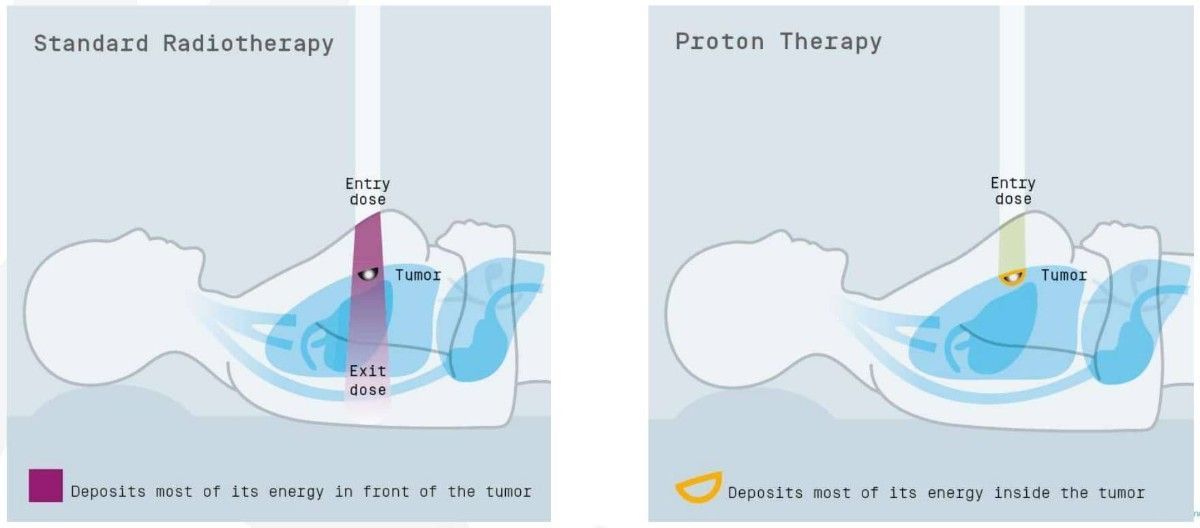
Proton therapy is a radiation therapy that uses tiny particles called protons. Protons are excellent cell killers, but because of the way protons deliver their energy, proton therapy does not damage as much healthy tissue as much as photon therapy. Therefore, a higher dose of radiation can be targeted at the tumour without affecting many normal healthy cells.
What type of cancer can be treated with Proton Therapy?
- Ocular tumours, including intraocular melanomas
- Tumours that approach or are located at the base of skull such as Chordoma and Chondrosarcomas
- Spine tumours - Primary or metastatic
- Hepatocellular cancer
- Paediatric solid tumours - primary or benign tumours in children
- Brain and spinal cord tumours - Malignant and benign
- Advanced and/or unrespectable head and neck cancers such as Cancers of the paranasal sinuses and other accessory sinuses; e.g. adenoid cystic carcinoma, Advanced Nasopharyngeal cancer and Advanced cancer of the buccal mucosa
- Retroperitoneal sarcomas
- Re-irradiation cases- where radiation is being considered for the second or third time to the same site
Why should you choose Proton Therapy for Prostate Cancer?
Proton therapy is one of the most effective forms of treatment for prostate cancer. Proton therapy may be used as the only treatment or can be combined with hormonal therapy or after other treatments, such as surgery, to manage cancer that has recurred or is at high risk of recurrence.
Because it involves significantly less radiation exposure to normal tissues, proton therapy lowers the risk of side effects and secondary radiation-induced cancers. Proton therapy has an excellent record of success, providing long-term disease control and survival rates equivalent to other treatments, including surgery.